Analytical Performance of the Spark UHPLC System
Sulfonamides as a Model Analyte Class
Overview
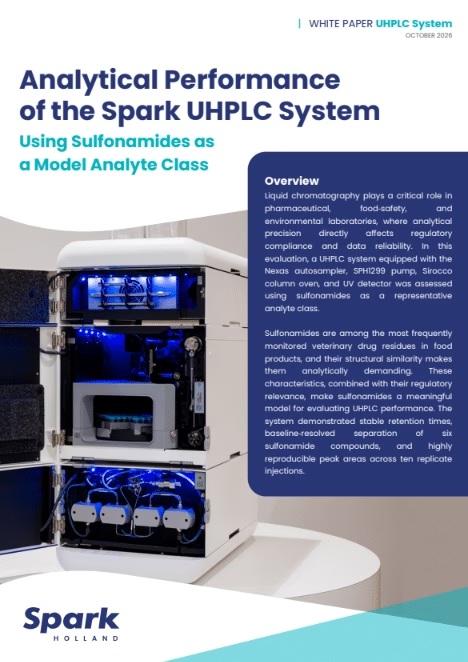
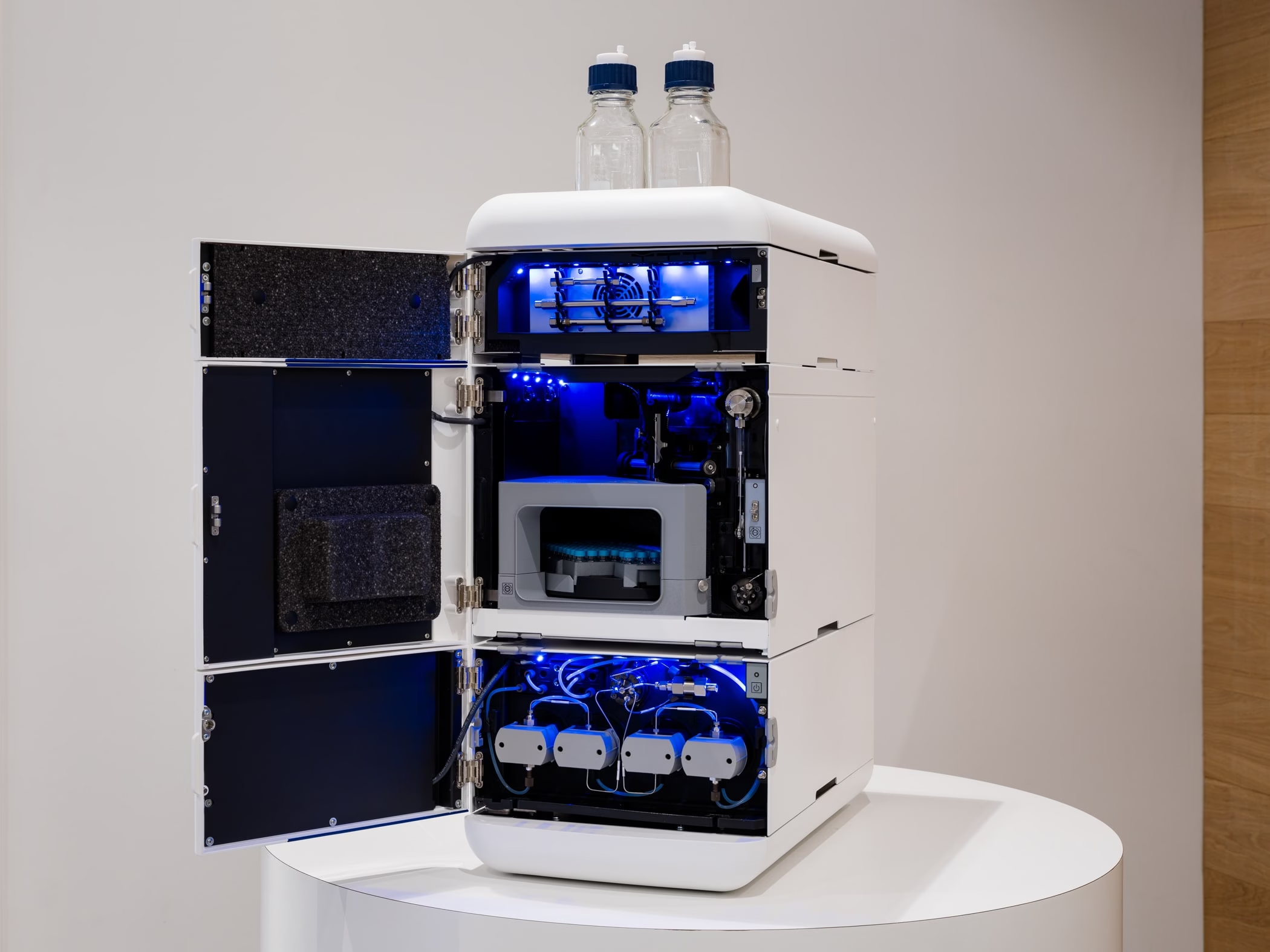
Liquid chromatography plays a critical role in pharmaceutical, food‑safety, and environmental laboratories, where analytical precision directly affects regulatory compliance and data reliability. In this evaluation, a UHPLC system equipped with the Nexas autosampler, SPH1299 pump, Sirocco column oven, and UV detector was assessed using sulfonamides as a representative analyte class.
Sulfonamides are among the most frequently monitored veterinary drug residues in food products, and their structural similarity makes them analytically demanding. These characteristics, combined with their regulatory relevance, make sulfonamides a meaningful model for evaluating UHPLC performance. The system demonstrated stable retention times, baseline‑resolved separation of six sulfonamide compounds, and highly reproducible peak areas across ten replicate injections.
Sulfonamides as a Model Analyte Class
Sulfonamides are synthetic antimicrobial agents used in human medicine, veterinary practice, and agriculture. Their widespread application has resulted in strict regulatory limits for residues in food products, environmental waters, and pharmaceutical formulations. Analytical laboratories therefore require LC systems capable of resolving compounds that share a common p‑aminobenzenesulfonamide core but differ only in subtle structural modifications (1). These similarities make chromatographic separation particularly sensitive to retention time stability, column temperature control, and flow rate precision.
Beyond their structural similarity, sulfonamides are analytically relevant because they represent a class of compounds that must routinely be quantified at low concentrations in complex matrices (2). Their regulatory importance, combined with their chromatographic behavior, makes them a suitable and scientifically justified model analyte for evaluating UHPLC performance. A system that can reliably separate and quantify sulfonamides under gradient conditions is generally well suited for a broad range of applications.
The UHPLC method parameters are summarized in Table 1.
Results
Ten replicate injections of the sulfonamide mixture were analyzed to evaluate chromatographic stability and autosampler precision. The overlay of all chromatograms showed consistent peak shapes and complete baseline separation of all six sulfonamides across the full sequence. Retention times remained tightly clustered, and peak areas showed minimal variation, indicating stable pump performance, precise injection volumes, and effective temperature control.
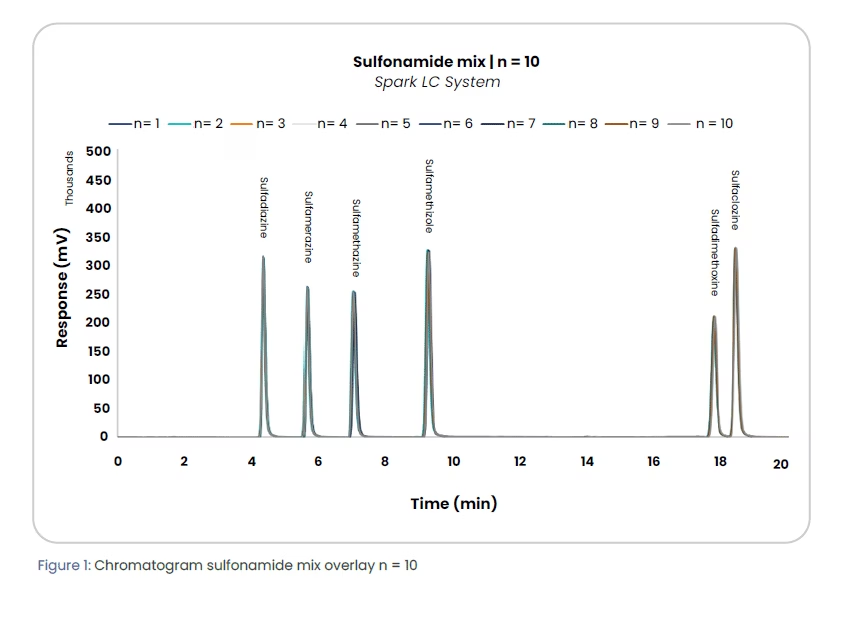
The calculated RSD values for peak area and retention time are summarized in Table 2. Peak area RSDs ranged from 0.12% to 0.23%, while retention time RSDs ranged from 0.05% to 0.25%. These values fall well within typical acceptance criteria for quantitative UHPLC analysis and demonstrate excellent system reproducibility for trace-level quantification. The low retention time variability further confirms the thermal stability of the Sirocco column oven and the flow consistency of the SPH1299 pump.
The combination of structural similarity among sulfonamides and their requirement for precise quantification makes them particularly suitable for evaluating UHPLC performance. Their chromatographic behavior is sensitive to subtle variations in flow, temperature, and injection precision, meaning that consistent results across multiple injections provide strong evidence of overall system robustness.
Conclusion
The UHPLC system equipped with the Model 870 autosampler, SPH1299 pump, and Sirocco column oven demonstrated robust and reproducible performance in the analysis of sulfonamides. The system delivered stable retention times, consistent peak shapes, and reliable quantification across ten replicate injections. Because sulfonamide analysis integrates structural similarity, regulatory relevance, and sensitivity to chromatographic conditions, it serves as a meaningful and scientifically justified model for evaluating UHPLC performance under routine laboratory conditions. These results support the suitability of the Spark UHPLC system for laboratories in pharmaceutical, environmental, and food‑safety sectors that require dependable, high‑precision liquid chromatography.
References
- Ovung, A., & Bhattacharyya, J. (2021). Sulfonamide drugs: structure, antibacterial property, toxicity, and biophysical interactions. Biophysical reviews, 13(2), 259- 272.
- Wei, X., Pang, Z., Fan, G., Xu, X., & Wang, L. (2018). Simultaneous Prediction of Retention Times and Peak Shapes of Sulfonamides in Reversed-Phase High-Performance Liquid Chromatography. Transactions of Tianjin University, 24(3), 256-262.